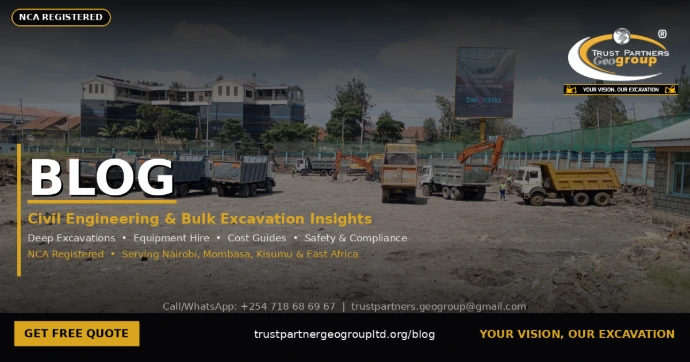
Excavation Safety Planning
OSHA Requirements and Risk Management
NCA licensed excavation contractors with 15+ years experience in safe excavation works across Kenya. Zero accidents, full compliance, protected workers.

What is Excavation Safety Planning?
Excavation safety planning is the process of identifying hazards, assessing risks, and implementing control measures before and during excavation works. It is a legal requirement and essential for protecting workers, equipment, and the public.
In Kenya, excavation safety must comply with OSHA standards, NCA regulations, and county government requirements. Proper planning prevents accidents, reduces liability, and ensures project continuity.
Before excavation, ensure you have completed a thorough soil investigation and understand your site clearing requirements.
OSHA Requirements for Excavation
OSHA (Occupational Safety and Health Administration) sets strict standards for excavation safety. These requirements apply to all excavations and must be followed to ensure worker safety.
Key OSHA Requirements
- Protective Systems: Required for trenches 1.5m (5 feet) deep or deeper
- Access/Egress: Ladders within 7.6m (25 feet) of workers in trenches 1.2m (4 feet) deep
- Inspections: Daily and after rainstorms by competent person
- Soil Classification: Type A, B, or C by competent person
- Spoil Piles: Minimum 0.6m (2 feet) from trench edge
- Utilities: Locate and mark all underground utilities before digging
- Atmospheric Testing: Required for trenches deeper than 1.2m (4 feet) in hazardous locations
- Permits: Required for excavations in public areas
Depth Requirements
- Less than 1.2m (4 feet): No protective system required unless soil shows signs of instability
- 1.2m to 1.5m (4-5 feet): Protective system may be required based on soil conditions
- 1.5m (5 feet) or deeper: Protective system always required
- 6m (20 feet) or deeper: Protective system must be designed by registered professional engineer
The Competent Person in Excavation
A competent person is central to excavation safety. OSHA requires a competent person to inspect excavations and ensure safety compliance.
Competent Person Qualifications
- Can identify existing and predictable hazards
- Has authority to take prompt corrective action
- Has knowledge of soil analysis and classification
- Understands protective systems and their limitations
- Can identify hazardous atmospheres
- Is capable of inspecting excavation works
Competent Person Duties
- Conduct daily inspections of excavations and protective systems
- Inspect after rainstorms, vibration, or other hazard-increasing events
- Classify soil as Type A, B, or C
- Determine appropriate protective systems
- Authorize entry into excavations
- Stop work and evacuate if hazards are identified
For deep excavation projects, see our guide on deep excavation monitoring.
Excavation Protective Systems
Protective systems prevent cave-ins and protect workers in excavations. The selection depends on soil type, depth, and site conditions.
Sloping
- Method: Cut trench walls at an angle away from the trench
- Best For: Stable soils, adequate space available
- Advantages: Simple, no equipment required
- Limitations: Requires significant space
Benching
- Method: Create stepped levels in trench walls
- Best For: Stable soils, deep excavations
- Advantages: Allows deeper excavations
- Limitations: Not suitable for Type C soil
Shoring
- Method: Install supports to prevent soil movement
- Best For: Unstable soils, deep excavations, limited space
- Advantages: Provides positive support
- Limitations: Requires installation time and cost
Shielding (Trench Boxes)
- Method: Use trench boxes to protect workers
- Best For: Deep trenches, unstable soils
- Advantages: Mobile, reusable, quick installation
- Limitations: Does not prevent cave-ins, only protects workers
| Soil Type | Maximum Vertical | Required Slope | Protective System |
|---|---|---|---|
| Type A (Stable) | 1.2m (4 ft) | 53° from horizontal | Sloping, benching, or shoring |
| Type B (Moderately Stable) | 1.2m (4 ft) | 45° from horizontal | Sloping, benching, or shoring |
| Type C (Unstable) | 1.2m (4 ft) | 34° from horizontal | Shoring or shielding required |
For excavation support systems, see our guide on sheet piles vs soldier piles.
Main Excavation Hazards
Understanding excavation hazards is essential for effective safety planning and risk management.
Cave-ins
- Most dangerous excavation hazard
- Can crush or suffocate workers instantly
- Caused by unstable soil, water, vibration, or excessive depth
- Prevention: Proper protective systems, soil classification
Falls
- Workers falling into excavation
- Equipment falling into excavation
- Prevention: Barriers, warning systems, safe access
Falling Loads
- Spoil piles falling into trench
- Materials or equipment falling
- Prevention: Spoil piles 0.6m from edge, secure materials
Hazardous Atmospheres
- Lack of oxygen
- Toxic gases (sewer gas, decomposing materials)
- Flammable vapors
- Prevention: Atmospheric testing, ventilation
Underground Utilities
- Electrocution from power lines
- Gas leaks from gas lines
- Flooding from water lines
- Prevention: Utility location, hand digging near utilities
Water Accumulation
- Drowning
- Trench instability
- Prevention: Dewatering, proper drainage
For dewatering solutions, see our guide on dewatering system design.
Excavation Permits in Kenya
Various permits are required for excavation works in Kenya, depending on location, depth, and scope.
Required Permits
- NCA Permit: Required for all construction works
- County Government Permit: Required for works in public areas
- Utility Clearance: Required before digging near utilities
- NEMA Approval: Required for works affecting environment
- Road Opening Permit: Required for excavations in roads
- Building Permit: Required for foundation excavations
- Excavation Permit: Required for deep excavations
Permit Requirements by County
- Nairobi: NCA, City County, NEMA
- Mombasa: NCA, County Government, NEMA, Kenya Ports Authority (coastal areas)
- Kisumu: NCA, County Government, NEMA
- Nakuru: NCA, County Government, NEMA
For tree removal and site clearing permits, see our guide on NEMA requirements for site clearing.
Excavation Safety Costs in Kenya: 2026 Guide
Safety costs are a necessary investment in excavation projects. The following provides current market ranges for budgeting.
| Safety Item | Cost Range (KES) | Unit |
|---|---|---|
| Safety Plan Preparation | 15,000-50,000 | per project |
| Soil Classification & Testing | 10,000-30,000 | per project |
| Protective System Design | 20,000-80,000 | per project |
| Safety Officer (Competent Person) | 5,000-15,000 | per day |
| Safety Equipment (Trench Boxes) | 50,000-200,000 | per project |
| Total Safety Cost | 5-15% of project | percentage |
Cost Factors
- Project size and complexity
- Excavation depth
- Soil conditions
- Duration of works
- Location and access
For accurate safety cost estimation, use our cost estimate calculator or WhatsApp us your requirements.
Need Excavation Safety Planning for Your Project?
Trust Partners provides professional excavation safety planning and risk management across Kenya. OSHA compliant, NCA licensed, zero accidents.
WhatsApp Us 📞 Tap to Call: +254 718 68 69 67Frequently Asked Questions
Excavation Safety Planning
OSHA Requirements and Risk Management
NCA licensed excavation contractors with 15+ years experience in safe excavation works across Kenya. Zero accidents, full compliance, protected workers.
What is Excavation Safety Planning?
Excavation safety planning is the process of identifying hazards, assessing risks, and implementing control measures before and during excavation works. It is a legal requirement and essential for protecting workers, equipment, and the public.
In Kenya, excavation safety must comply with OSHA standards, NCA regulations, and county government requirements. Proper planning prevents accidents, reduces liability, and ensures project continuity.
Before excavation, ensure you have completed a thorough soil investigation and understand your site clearing requirements.
OSHA Requirements for Excavation
OSHA (Occupational Safety and Health Administration) sets strict standards for excavation safety. These requirements apply to all excavations and must be followed to ensure worker safety.
Key OSHA Requirements
- Protective Systems: Required for trenches 1.5m (5 feet) deep or deeper
- Access/Egress: Ladders within 7.6m (25 feet) of workers in trenches 1.2m (4 feet) deep
- Inspections: Daily and after rainstorms by competent person
- Soil Classification: Type A, B, or C by competent person
- Spoil Piles: Minimum 0.6m (2 feet) from trench edge
- Utilities: Locate and mark all underground utilities before digging
- Atmospheric Testing: Required for trenches deeper than 1.2m (4 feet) in hazardous locations
- Permits: Required for excavations in public areas
Depth Requirements
- Less than 1.2m (4 feet): No protective system required unless soil shows signs of instability
- 1.2m to 1.5m (4-5 feet): Protective system may be required based on soil conditions
- 1.5m (5 feet) or deeper: Protective system always required
- 6m (20 feet) or deeper: Protective system must be designed by registered professional engineer
The Competent Person in Excavation
A competent person is central to excavation safety. OSHA requires a competent person to inspect excavations and ensure safety compliance.
Competent Person Qualifications
- Can identify existing and predictable hazards
- Has authority to take prompt corrective action
- Has knowledge of soil analysis and classification
- Understands protective systems and their limitations
- Can identify hazardous atmospheres
- Is capable of inspecting excavation works
Competent Person Duties
- Conduct daily inspections of excavations and protective systems
- Inspect after rainstorms, vibration, or other hazard-increasing events
- Classify soil as Type A, B, or C
- Determine appropriate protective systems
- Authorize entry into excavations
- Stop work and evacuate if hazards are identified
For deep excavation projects, see our guide on deep excavation monitoring.
Excavation Protective Systems
Protective systems prevent cave-ins and protect workers in excavations. The selection depends on soil type, depth, and site conditions.
Sloping
- Method: Cut trench walls at an angle away from the trench
- Best For: Stable soils, adequate space available
- Advantages: Simple, no equipment required
- Limitations: Requires significant space
Benching
- Method: Create stepped levels in trench walls
- Best For: Stable soils, deep excavations
- Advantages: Allows deeper excavations
- Limitations: Not suitable for Type C soil
Shoring
- Method: Install supports to prevent soil movement
- Best For: Unstable soils, deep excavations, limited space
- Advantages: Provides positive support
- Limitations: Requires installation time and cost
Shielding (Trench Boxes)
- Method: Use trench boxes to protect workers
- Best For: Deep trenches, unstable soils
- Advantages: Mobile, reusable, quick installation
- Limitations: Does not prevent cave-ins, only protects workers
| Soil Type | Maximum Vertical | Required Slope | Protective System |
|---|---|---|---|
| Type A (Stable) | 1.2m (4 ft) | 53° from horizontal | Sloping, benching, or shoring |
| Type B (Moderately Stable) | 1.2m (4 ft) | 45° from horizontal | Sloping, benching, or shoring |
| Type C (Unstable) | 1.2m (4 ft) | 34° from horizontal | Shoring or shielding required |
For excavation support systems, see our guide on sheet piles vs soldier piles.
Main Excavation Hazards
Understanding excavation hazards is essential for effective safety planning and risk management.
Cave-ins
- Most dangerous excavation hazard
- Can crush or suffocate workers instantly
- Caused by unstable soil, water, vibration, or excessive depth
- Prevention: Proper protective systems, soil classification
Falls
- Workers falling into excavation
- Equipment falling into excavation
- Prevention: Barriers, warning systems, safe access
Falling Loads
- Spoil piles falling into trench
- Materials or equipment falling
- Prevention: Spoil piles 0.6m from edge, secure materials
Hazardous Atmospheres
- Lack of oxygen
- Toxic gases (sewer gas, decomposing materials)
- Flammable vapors
- Prevention: Atmospheric testing, ventilation
Underground Utilities
- Electrocution from power lines
- Gas leaks from gas lines
- Flooding from water lines
- Prevention: Utility location, hand digging near utilities
Water Accumulation
- Drowning
- Trench instability
- Prevention: Dewatering, proper drainage
For dewatering solutions, see our guide on dewatering system design.
Excavation Permits in Kenya
Various permits are required for excavation works in Kenya, depending on location, depth, and scope.
Required Permits
- NCA Permit: Required for all construction works
- County Government Permit: Required for works in public areas
- Utility Clearance: Required before digging near utilities
- NEMA Approval: Required for works affecting environment
- Road Opening Permit: Required for excavations in roads
- Building Permit: Required for foundation excavations
- Excavation Permit: Required for deep excavations
Permit Requirements by County
- Nairobi: NCA, City County, NEMA
- Mombasa: NCA, County Government, NEMA, Kenya Ports Authority (coastal areas)
- Kisumu: NCA, County Government, NEMA
- Nakuru: NCA, County Government, NEMA
For tree removal and site clearing permits, see our guide on NEMA requirements for site clearing.
Excavation Safety Costs in Kenya: 2026 Guide
Safety costs are a necessary investment in excavation projects. The following provides current market ranges for budgeting.
| Safety Item | Cost Range (KES) | Unit |
|---|---|---|
| Safety Plan Preparation | 15,000-50,000 | per project |
| Soil Classification & Testing | 10,000-30,000 | per project |
| Protective System Design | 20,000-80,000 | per project |
| Safety Officer (Competent Person) | 5,000-15,000 | per day |
| Safety Equipment (Trench Boxes) | 50,000-200,000 | per project |
| Total Safety Cost | 5-15% of project | percentage |
Cost Factors
- Project size and complexity
- Excavation depth
- Soil conditions
- Duration of works
- Location and access
For accurate safety cost estimation, use our cost estimate calculator or WhatsApp us your requirements.
Need Excavation Safety Planning for Your Project?
Trust Partners provides professional excavation safety planning and risk management across Kenya. OSHA compliant, NCA licensed, zero accidents.
WhatsApp Us 📞 Tap to Call: +254 718 68 69 67