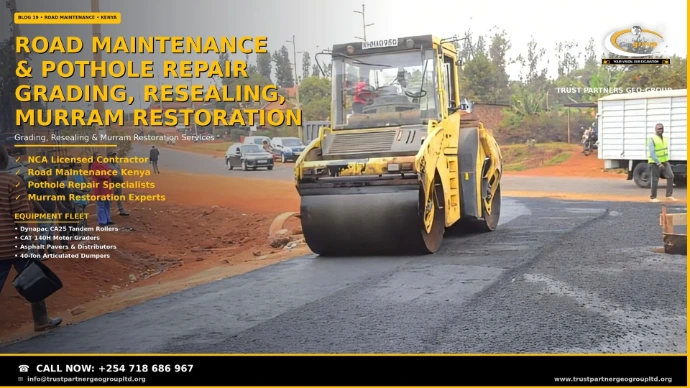
Road Maintenance and Pothole Repair in Kenya: Grading, Resealing and Murram Restoration Guide
Roads do not fail suddenly — they fail deferred. The formation chain behind every pothole, the six-step permanent repair, and the maintenance calendar that costs a tenth of reconstruction.

1. Roads Fail Deferred, Not Suddenly
Every failed road was a maintained road once — the failure was decided in the maintenance budget years before the surface showed it. The arithmetic that should govern every county and estate programme: preventive maintenance costs a tenth of reconstruction. This guide covers the full maintenance toolkit as practised in our services portfolio by Trust Partners Geo-Group under our road construction and paving service, with the construction-side foundations in this cluster's road earthworks guide.
2. The Pothole Formation Chain
The chain is always the same; the speed varies with traffic and rain:
- Water enters through unsealed cracks — every unsealed crack is a funnel.
- The base softens — water weakens base and subgrade, or pumps them into suspension under wheels.
- The surface fatigues — traffic flexes the weakened layer until it cracks wider.
- Chunks work loose under tyres — the pothole is born.
- It grows geometrically — each wheel hammers the edges, ejects material, deepens the cavity.
The aggravators: poor original compaction; missing or blocked drainage letting water stand; overloaded trucks flexing beyond design; deferred maintenance letting the first crack become the first crater. The corollary: potholes are a drainage and maintenance failure before they are a surface failure — the cheapest programme keeps water off the road and seals cracks while they are still cracks.
3. The Six-Step Permanent Pothole Repair
- Cut — saw or jackhammer to rectangular geometry with vertical edges, into sound material around the perimeter; feathered patches fail at their feather edge.
- Clean — remove all loose material, dust and water; a dirty, wet hole guarantees the patch peels.
- Tack — bituminous tack coat on faces and base; the bond that stops water migrating along the interface.
- Fill — hot asphalt mix placed and compacted in lifts beyond 75mm depth; cold mix is the emergency answer by design.
- Compact — plate or roller to refusal; density is the repair.
- Seal — perimeter sealed flush so no water re-enters.
Throw-and-go costs half and lasts weeks; the six-step method costs double and lasts years. Batch potholes by ward with systematic gangs and every metric improves: cost per hole, lifespan per patch, complaints per kilometre.
4. Grading: The Recurring Discipline
The grader pass that protects everything: active rural roads every two to four months; low-traffic access roads once or twice a year; an inspection pass after every significant storm. The method that makes each pass count: scarify where the surface has set; cut highs and fill lows across the full width — wheel-track-only grading bathtubs the road and destroys it faster than no grading; restore camber to 2.5–4%; re-compact; clear every drain and culvert on the run. Fleet: grader, water bowser, roller — a KES 150,000 pass protecting a KES 3M-per-km asset.
5. Murram Restoration: When & How
Needed when the surface is beyond grading: ruts deeper than the grader recovers, corrugation returning within days, gravel displaced to shoulders, subgrade showing. The method: grade and shape first, correcting camber and drains; place 50–100mm of fresh material in compacted lifts — PI below ~12%, proper gradation, because bad murram turns to grease in the rains; water to optimum and compact to 95%+; finish tight and slightly proud for traffic to bed in. Every two to four years on active roads, with grading between. The standing debate — murram versus asphalt — resolves differently per traffic and budget, but the maintenance arithmetic is constant.
6. Resealing: The Preventive Coat
Surface dressing — a thin bituminous spray and stone chip — seals the cracks before the chain starts, restores surface texture and extends asphalt life by years. Timing: on schedule, before distress shows; on a road already potholing, resealing is medicine after the fever. The window discipline that decides success: dry weather, clean surface, proper chip spread and rolling.
7. Costs 2026 per km
| Treatment | 2026 Band (KES/km, 7m carriageway) | Cycle |
|---|---|---|
| Routine grading pass | 80,000–200,000 | 2–4 months (active roads) |
| Murram restoration | 300,000–800,000 | 2–4 years |
| Pothole repair programme | 150,000–400,000 | Reactive / batch |
| Resealing / surface dressing | 400,000–900,000 | 5–8 years preventive |
| Reconstruction (starved road) | 8M–15M | The price of deferral |
Price any treatment on the calculator — and compare it against the reconstruction line it prevents.
8. Frequently Asked Questions
2026 bands by treatment class, per kilometre of 7-metre carriageway: routine grading and shaping of gravelled roads — the grader-and-water-bowser pass that restores camber and clears silt — at KES 80,000–200,000 per pass, typically two to four passes a year on active rural roads. Murram restoration — regravelling thin, rutted surfaces with 50–100mm of fresh material — at KES 300,000–800,000 per km depending on material haul distance, which dominates the arithmetic. Pothole repair programmes on paved roads — cut, clean, tack, fill, compact — at KES 150,000–400,000 per km for scattered repairs; continuous distressed lengths re-price as resurfacing. Resealing/surface dressing — the preventive coat that doubles asphalt life — at KES 400,000–900,000 per km. The economics that decide the budget: preventive maintenance costs a tenth of reconstruction — a road resealed on schedule never needs the KES 8M–15M per km rebuild that a starved one demands within a decade. The calculator prices any of these against your network.
The formation chain is always the same; the speed varies with traffic and rain. It starts beneath the surface: water enters through unsealed cracks — every unsealed crack is a funnel. The water softens the base and subgrade, or pumps them into suspension under passing wheels. Traffic loads then flex the weakened surface until it fatigue-cracks; the cracks widen, more water enters, and freeze-thaw is irrelevant here — Kenya's wet-season thermal cycling and millions of wheel passes do the same work. Chunks work loose under tyres — the pothole is born — and it grows geometrically: each passing wheel hammers the edges, ejects material, deepens the cavity. The aggravators that speed the chain: poor original compaction leaving a soft base; missing or blocked drainage letting water stand; overloaded trucks flexing surfaces beyond design; and deferred maintenance letting the first crack become the first crater. The engineering corollary: potholes are a drainage and maintenance failure before they are a surface failure — which is why the cheapest pothole programme is the one that keeps water off the road and seals the cracks while they are still cracks.
The permanent repair sequence — the one that outlasts the next rains — in six steps. Cut: saw or jackhammer the pothole into a rectangular geometry with vertical edges, extending into sound material around the perimeter — feathered patches fail at their feather edge. Clean: remove all loose material, dust and water — compressed air and wire brush; a dirty, wet hole guarantees the patch peels. Tack: coat the faces and base with bituminous tack coat — the bond between old and new that stops water migrating along the interface. Fill: hot asphalt mix placed and compacted in lifts if deeper than about 75mm — cold mix serves for small emergency repairs but is the temporary answer by design. Compact: plate or roller compaction to refusal — density is the repair; under-compacted patches compact under traffic and re-sink. Seal: the perimeter sealed flush so no water re-enters. The throw-and-go method — cold mix dumped and driven over — costs half and lasts weeks; the six-step method costs double and lasts years. County programmes that batch potholes by ward and run gangs systematically beat reactive one-at-a-time repairs on every metric: cost per hole, lifespan per patch, and complaints per kilometre.
Murram restoration re-lays the wearing surface of gravelled roads: fresh lateritic gravel spread, shaped to camber, watered and compacted over the existing formation. It is needed when the surface has worn or been lost beyond what grading can recover — ruts deeper than the grader can cut and fill, corrugation that returns within days of grading, gravel displaced to the shoulders and drains, or a surface so thin the subgrade shows. The method: grade and shape the existing surface first, correcting camber and clearing silted drains; then place 50–100mm of fresh material in compacted lifts — material specification matters, a plasticity index below about 12% and a proper gradation, because bad murram turns to grease in the rains; water to optimum moisture and compact to 95%+ Proctor; finish with a tight, slightly proud surface that traffic beds in. Frequency on active rural roads: every two to four years, with grading between. Costed 2026: KES 300,000–800,000 per km, haul distance the dominant variable — a county pit twenty kilometres away can double the material line. The alternative arithmetic: a murram road maintained on schedule costs a fraction of the paved equivalent per service year, which is why the murram-versus-asphalt decision remains Kenya's standing infrastructure debate.
By traffic and climate, not the calendar alone — but the calendar disciplines the programme. Active rural roads carrying daily traffic: grading every two to four months — the grader pass that restores camber, cuts corrugation, re-shoulders and clears silted drains. Low-traffic ranch and access roads: once or twice a year. After every significant storm event: an inspection pass, because blocked drains and scoured shoulders are the pothole seeds of next season. The grading method that makes each pass count: scarify first where the surface has set; cut high spots and fill lows across the full width, not just the wheel tracks — wheel-track-only grading creates a bathtub that ponds water and destroys the road faster than no grading; restore camber to the 2.5–4% crossfall; re-compact the loosened material; and clear every drain and culvert on the run. The fleet is modest — a motor grader, water bowser and roller — and the economics decisive: a KES 150,000 grading pass every quarter protects a KES 3M-per-km asset; the same road starved of grading needs full murram restoration at five times the annual cost. Maintenance is the cheapest construction Kenya never budgets for.
Maintain on Schedule. Never Rebuild.
Trust Partners Geo-Group Ltd maintains roads across Kenya — grading cycles, batch pothole programmes, murram restoration and resealing — with the graders, rollers and discipline that keep networks alive at a tenth of reconstruction cost.
Price Your Maintenance Programme✉️ Contact Us
📞 +254 718 68 69 67
Road Maintenance and Pothole Repair in Kenya: Grading, Resealing and Murram Restoration Guide
Roads do not fail suddenly — they fail deferred. The formation chain behind every pothole, the six-step permanent repair, and the maintenance calendar that costs a tenth of reconstruction.
1. Roads Fail Deferred, Not Suddenly
Every failed road was a maintained road once — the failure was decided in the maintenance budget years before the surface showed it. The arithmetic that should govern every county and estate programme: preventive maintenance costs a tenth of reconstruction. This guide covers the full maintenance toolkit as practised in our services portfolio by Trust Partners Geo-Group under our road construction and paving service, with the construction-side foundations in this cluster's road earthworks guide.
2. The Pothole Formation Chain
The chain is always the same; the speed varies with traffic and rain:
- Water enters through unsealed cracks — every unsealed crack is a funnel.
- The base softens — water weakens base and subgrade, or pumps them into suspension under wheels.
- The surface fatigues — traffic flexes the weakened layer until it cracks wider.
- Chunks work loose under tyres — the pothole is born.
- It grows geometrically — each wheel hammers the edges, ejects material, deepens the cavity.
The aggravators: poor original compaction; missing or blocked drainage letting water stand; overloaded trucks flexing beyond design; deferred maintenance letting the first crack become the first crater. The corollary: potholes are a drainage and maintenance failure before they are a surface failure — the cheapest programme keeps water off the road and seals cracks while they are still cracks.
3. The Six-Step Permanent Pothole Repair
- Cut — saw or jackhammer to rectangular geometry with vertical edges, into sound material around the perimeter; feathered patches fail at their feather edge.
- Clean — remove all loose material, dust and water; a dirty, wet hole guarantees the patch peels.
- Tack — bituminous tack coat on faces and base; the bond that stops water migrating along the interface.
- Fill — hot asphalt mix placed and compacted in lifts beyond 75mm depth; cold mix is the emergency answer by design.
- Compact — plate or roller to refusal; density is the repair.
- Seal — perimeter sealed flush so no water re-enters.
Throw-and-go costs half and lasts weeks; the six-step method costs double and lasts years. Batch potholes by ward with systematic gangs and every metric improves: cost per hole, lifespan per patch, complaints per kilometre.
4. Grading: The Recurring Discipline
The grader pass that protects everything: active rural roads every two to four months; low-traffic access roads once or twice a year; an inspection pass after every significant storm. The method that makes each pass count: scarify where the surface has set; cut highs and fill lows across the full width — wheel-track-only grading bathtubs the road and destroys it faster than no grading; restore camber to 2.5–4%; re-compact; clear every drain and culvert on the run. Fleet: grader, water bowser, roller — a KES 150,000 pass protecting a KES 3M-per-km asset.
5. Murram Restoration: When & How
Needed when the surface is beyond grading: ruts deeper than the grader recovers, corrugation returning within days, gravel displaced to shoulders, subgrade showing. The method: grade and shape first, correcting camber and drains; place 50–100mm of fresh material in compacted lifts — PI below ~12%, proper gradation, because bad murram turns to grease in the rains; water to optimum and compact to 95%+; finish tight and slightly proud for traffic to bed in. Every two to four years on active roads, with grading between. The standing debate — murram versus asphalt — resolves differently per traffic and budget, but the maintenance arithmetic is constant.
6. Resealing: The Preventive Coat
Surface dressing — a thin bituminous spray and stone chip — seals the cracks before the chain starts, restores surface texture and extends asphalt life by years. Timing: on schedule, before distress shows; on a road already potholing, resealing is medicine after the fever. The window discipline that decides success: dry weather, clean surface, proper chip spread and rolling.
7. Costs 2026 per km
| Treatment | 2026 Band (KES/km, 7m carriageway) | Cycle |
|---|---|---|
| Routine grading pass | 80,000–200,000 | 2–4 months (active roads) |
| Murram restoration | 300,000–800,000 | 2–4 years |
| Pothole repair programme | 150,000–400,000 | Reactive / batch |
| Resealing / surface dressing | 400,000–900,000 | 5–8 years preventive |
| Reconstruction (starved road) | 8M–15M | The price of deferral |
Price any treatment on the calculator — and compare it against the reconstruction line it prevents.
8. Frequently Asked Questions
2026 bands by treatment class, per kilometre of 7-metre carriageway: routine grading and shaping of gravelled roads — the grader-and-water-bowser pass that restores camber and clears silt — at KES 80,000–200,000 per pass, typically two to four passes a year on active rural roads. Murram restoration — regravelling thin, rutted surfaces with 50–100mm of fresh material — at KES 300,000–800,000 per km depending on material haul distance, which dominates the arithmetic. Pothole repair programmes on paved roads — cut, clean, tack, fill, compact — at KES 150,000–400,000 per km for scattered repairs; continuous distressed lengths re-price as resurfacing. Resealing/surface dressing — the preventive coat that doubles asphalt life — at KES 400,000–900,000 per km. The economics that decide the budget: preventive maintenance costs a tenth of reconstruction — a road resealed on schedule never needs the KES 8M–15M per km rebuild that a starved one demands within a decade. The calculator prices any of these against your network.
The formation chain is always the same; the speed varies with traffic and rain. It starts beneath the surface: water enters through unsealed cracks — every unsealed crack is a funnel. The water softens the base and subgrade, or pumps them into suspension under passing wheels. Traffic loads then flex the weakened surface until it fatigue-cracks; the cracks widen, more water enters, and freeze-thaw is irrelevant here — Kenya's wet-season thermal cycling and millions of wheel passes do the same work. Chunks work loose under tyres — the pothole is born — and it grows geometrically: each passing wheel hammers the edges, ejects material, deepens the cavity. The aggravators that speed the chain: poor original compaction leaving a soft base; missing or blocked drainage letting water stand; overloaded trucks flexing surfaces beyond design; and deferred maintenance letting the first crack become the first crater. The engineering corollary: potholes are a drainage and maintenance failure before they are a surface failure — which is why the cheapest pothole programme is the one that keeps water off the road and seals the cracks while they are still cracks.
The permanent repair sequence — the one that outlasts the next rains — in six steps. Cut: saw or jackhammer the pothole into a rectangular geometry with vertical edges, extending into sound material around the perimeter — feathered patches fail at their feather edge. Clean: remove all loose material, dust and water — compressed air and wire brush; a dirty, wet hole guarantees the patch peels. Tack: coat the faces and base with bituminous tack coat — the bond between old and new that stops water migrating along the interface. Fill: hot asphalt mix placed and compacted in lifts if deeper than about 75mm — cold mix serves for small emergency repairs but is the temporary answer by design. Compact: plate or roller compaction to refusal — density is the repair; under-compacted patches compact under traffic and re-sink. Seal: the perimeter sealed flush so no water re-enters. The throw-and-go method — cold mix dumped and driven over — costs half and lasts weeks; the six-step method costs double and lasts years. County programmes that batch potholes by ward and run gangs systematically beat reactive one-at-a-time repairs on every metric: cost per hole, lifespan per patch, and complaints per kilometre.
Murram restoration re-lays the wearing surface of gravelled roads: fresh lateritic gravel spread, shaped to camber, watered and compacted over the existing formation. It is needed when the surface has worn or been lost beyond what grading can recover — ruts deeper than the grader can cut and fill, corrugation that returns within days of grading, gravel displaced to the shoulders and drains, or a surface so thin the subgrade shows. The method: grade and shape the existing surface first, correcting camber and clearing silted drains; then place 50–100mm of fresh material in compacted lifts — material specification matters, a plasticity index below about 12% and a proper gradation, because bad murram turns to grease in the rains; water to optimum moisture and compact to 95%+ Proctor; finish with a tight, slightly proud surface that traffic beds in. Frequency on active rural roads: every two to four years, with grading between. Costed 2026: KES 300,000–800,000 per km, haul distance the dominant variable — a county pit twenty kilometres away can double the material line. The alternative arithmetic: a murram road maintained on schedule costs a fraction of the paved equivalent per service year, which is why the murram-versus-asphalt decision remains Kenya's standing infrastructure debate.
By traffic and climate, not the calendar alone — but the calendar disciplines the programme. Active rural roads carrying daily traffic: grading every two to four months — the grader pass that restores camber, cuts corrugation, re-shoulders and clears silted drains. Low-traffic ranch and access roads: once or twice a year. After every significant storm event: an inspection pass, because blocked drains and scoured shoulders are the pothole seeds of next season. The grading method that makes each pass count: scarify first where the surface has set; cut high spots and fill lows across the full width, not just the wheel tracks — wheel-track-only grading creates a bathtub that ponds water and destroys the road faster than no grading; restore camber to the 2.5–4% crossfall; re-compact the loosened material; and clear every drain and culvert on the run. The fleet is modest — a motor grader, water bowser and roller — and the economics decisive: a KES 150,000 grading pass every quarter protects a KES 3M-per-km asset; the same road starved of grading needs full murram restoration at five times the annual cost. Maintenance is the cheapest construction Kenya never budgets for.
Maintain on Schedule. Never Rebuild.
Trust Partners Geo-Group Ltd maintains roads across Kenya — grading cycles, batch pothole programmes, murram restoration and resealing — with the graders, rollers and discipline that keep networks alive at a tenth of reconstruction cost.
Price Your Maintenance Programme✉️ Contact Us
📞 +254 718 68 69 67