INTRODUCTION
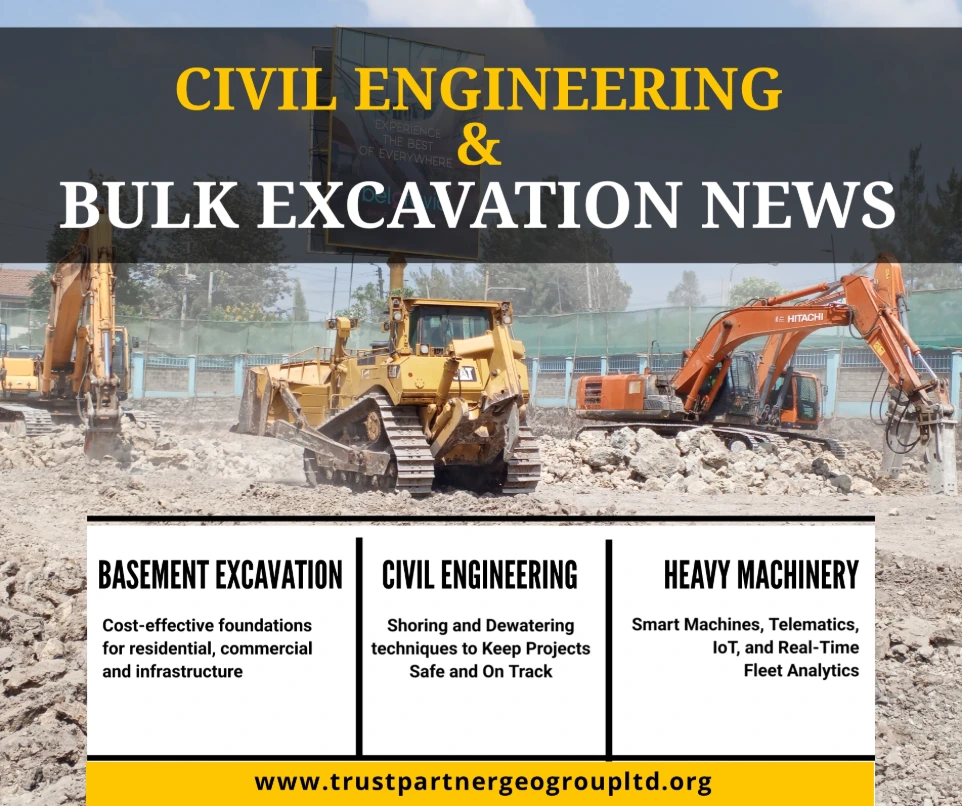
Basement excavation is a pivotal phase in many modern construction projects, offering valuable space for parking, storage, mechanical rooms, or future expansion. In Kenya, rapid urbanization, limited developable land, and the push for sustainable, mixed-use developments have elevated the importance of well-planned bulk basement excavation. At Trust Partners Geo-Group (TPG), we bring years of geotechnical expertise, engineering precision, and safety-first execution to deliver reliable, cost-effective basement solutions.
This blog provides an insightful, educative overview of bulk
basement excavation in Kenya, covering key considerations, best practices, local regulatory context, and how TPG adds value to your project.WHAT IS BULK BASEMENT EXCAVATION?
Bulk basement excavation refers to the large-scale removal of earth to create below-ground levels beneath a building or development. Typical objectives include:
- - Parking spaces (underground garages)
- - Utility rooms, mechanical/electrical spaces
- - Storage and logistics hubs
- - Sustainable basements for energy efficiency (e.g., reduced heat gain)
Key distinctions:
Depth and scale: Larger footprints and deeper excavations require robust planning and support systems.
Support systems: Retaining walls, dewatering, and soil stabilization are critical for safety and structural integrity.
Geotechnical integration: Soil type, groundwater conditions, and bedrock depth dictate design and methods.
WHY KENYA, AND WHY NOW?
- Urban Growth and Land Utilization
Kenya’s major cities—Nairobi, Mombasa, Kisumu, and others—are expanding vertically and horizontally. As land becomes scarcer, basements provide valuable space without expanding the urban footprint.
- Economic and Sustainable Imperatives
- Underground parking reduces above-ground congestion and heat islands.
 - Efficient use of land supports mixed-use developments, improving property value and city livability.
- Properly designed basements can integrate with sustainable drainage, rainwater harvesting, and energy systems.
- Regulatory and Market Context
- Local standards prioritize structural safety, groundwater management, and environmental protection.
- The Kenyan market increasingly demands experienced geotechnical partners who can deliver on time, within budget, and with transparent risk management.
Trust Partners Geo-Group operates with a strong adherence to Kenyan codes and international best practices, ensuring compliance, quality, and safety.
Our Core Technical Considerations in Basement Excavation
1. Site Investigation and Geotechnical Profiling
- Soil stratigraphy: Determine soil types (clay, silt, sand, gravel) and consistency.
- Groundwater table: Assess seasonal fluctuations and potential inflows.
- Bedrock depth: Influence excavation methods and support design.
- Contaminants and pollutants: Identify any hazardous materials or historical contamination.
- Adjacent structures and utilities: Map nearby foundations, pipelines, and electrical lines.

TPG emphasizes thorough Desk Studies + Site Investigations (DS+SI), including borehole logs, Standard Penetration Tests (SPT), cone penetration tests (CPT), and geophysical surveys as needed.
2. Excavation Methodology
- Open-cut Excavation: Viable for shallow basements with stable soils and controlled groundwater.
- Withdrawing/dewatering: Pumping and groundwater control to maintain a dry working zone.
- Slurry walls, diaphragm walls, or secant piles: When adjacent structures or high groundwater pressures demand robust retaining systems.
- Ground improvement: Jet grouting, soil stabilization, or vertical drains to enhance soil properties and reduce settlements.
- Temporary works design: Excavation shoring (才能 retaining systems) to ensure worker safety and support integrity.
3. Retaining Systems and Structural Design
- Retaining walls: Cantilever or Tie-back systems depending on soil and space constraints.
- Bracing and struts: To resist earth pressures during excavation.
- Decking and temporary floors: To redistribute loads and provide working platforms.
- Corrosion protection: For steel structures in aggressive soils or high moisture conditions.

4. Dewatering and Groundwater Management
- Wellpoints, submersible pumps, and main dewatering wells: for controlled water removal.
- Sump design and discharge plans: aligned with environmental regulations.
- Water treatment and disposal: to prevent siltation and contamination of local waterways.

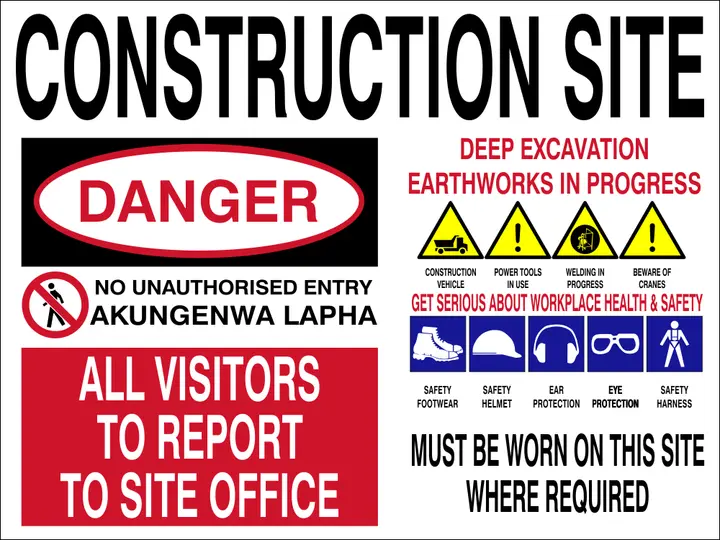
5. Risk, Safety, and Environmental Management
- Risk assessment (HAZID/HAZOP): Identify and mitigate collapse, drowning, and equipment hazards.
- Site plans: PPE, training, fall protection, confined space protocols.
- Dust and noise control: Water sprays, enclosures, and quiet machinery.
- Waste management: On-site separation of excavated material, reuse where feasible, and disposal of excess soil per regulations.
- Environmental protection: Spill prevention, sediment control, and protection of stormwater systems.
6. Quality Assurance and Documentation
- As-built records: Excavation depths, retainment configurations, dewatering metrics.
- Laboratory testing: Soil classification, compaction tests, and moisture content.
- Progress reporting: Regular updates to the client, insurer, and governing bodies.

Practical Best Practices from Trust Partners Geo-Group
1. Early Collaboration with Design Teams
- Engage geotechnical engineers, structural designers, and
 MEP teams in the earliest design phases to align excavation strategy with structural requirements and service layouts.
2. Comprehensive Site Characterization
- Invest in a robust DS+SI program. In Kenya, groundwater variability can be significant; understanding this upfront reduces surprises during excavation.
3. Adaptive Dewatering Strategy
- Develop multiple dewatering options and contingency
 plans. Local hydrogeology and rainfall patterns influence groundwater dynamics.
4. Robust Temporary Works Design
- Prioritize safe, code-compliant shoring systems. Temporary works often drive schedule and safety outcomes.
5. Sustainable Material Handling
- Reuse clean excavated material where appropriate; otherwise, ensure compliant disposal. Consider material recycling or soil improvement for non-structural uses.
6. Community & Environmental Stewardship
- Communicate with local stakeholders, protect nearby watercourses, and minimize nuisance to neighboring residents and businesses.

7. Safety-First Culture
- Continuous training, site drills, and clear emergency response protocols reduce incident risk and protect workers.
8. Transparent Cost Management
- Break down costs by activity (permitting, groundworks, dewatering, temporary works, disposal) and provide early visibility into potential cost drivers.
Regulatory and Permitting Landscape in Kenya
Planning and approvals
Obtain necessary approvals from local county authorities and national agencies, ensuring alignment with Kenya’s building codes and environmental guidelines.
Environmental considerations
Assess potential impacts on groundwater, surface water, soil stability, and nearby ecosystems.
Worker safety regulations
Comply with national occupational safety standards, including PPE, training, and site supervision requirements.
Waste and materials handling
Follow guidelines for disposal and reuse of excavated soils and construction waste. TPG maintains strong relationships with regulators and uses a compliant, audit-ready approach to documentation and reporting.
Why Trust Partners Geo-Group? What We Bring to Your Basement Project
- Geotechnical excellence: Deep expertise in soil characterization, groundwater management, and soil-structure interaction.
- Tailored solutions: Excavation strategies customized to site conditions, building loads, and long-term performance goals.
- Integrated team approach: Collaboration with architects, engineers, and contractors to optimize design, cost, and schedule.
 - Safety and compliance: Proactive safety culture and rigorous compliance with Kenyan and international standards.
- Sustainable practice: Efficient use of materials, waste minimization, and energy-conscious basements.
Getting Started with Trust Partners Geo-Group
If you’re planning a bulk basement excavation project in Kenya, here’s how to engage with us:
- Share project brief and site location.
- Schedule a preliminary site visit and geotechnical assessment.
Contact us at;
📧 trustpartners.geogroup@gmail.com
🌐 www.trustpartnergeogroupltd.org
Conclusion
Bulk basement excavation in Kenya is a complex, high-stakes discipline that sits at the intersection of geotechnical science, structural engineering, safety, and environmental stewardship. With careful planning, robust temporary works, effective groundwater management, and a collaborative mindset, projects can achieve exceptional outcomes—unlocking valuable space while safeguarding people, assets, and the environment.
Trust Partners Geo-Group is dedicated to delivering insightful, reliable, and compliant basement solutions that stand the test of time. If you’re pursuing a basement-heavy development, we’d be glad to help you navigate the challenges and realize the full value of your project.
For more information or to request a consult, please visit our website or contact our team directly.